

The GRIT 30-Second Single-Leg Balance Challenge

Updated: 5 days ago
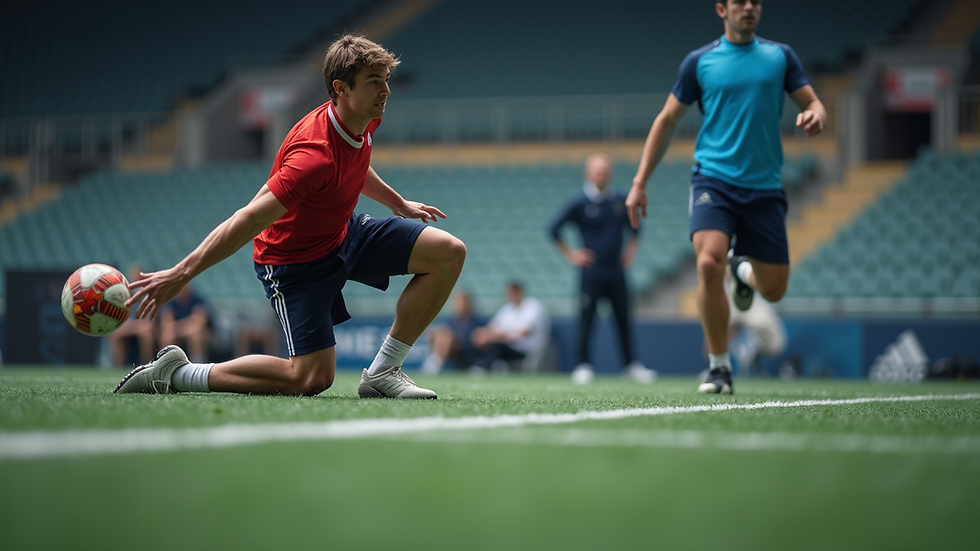
Can you balance on one leg in this position for 30 seconds? Better yet, can you do it without losing control?
Being a great athlete isn’t just about being fast, strong, or powerful. It’s also about how well you control your body.
At GRIT, we don’t just look at how much weight you can lift or how long you can hold a position. We look at how well you move, stay balanced, and control your body.
That’s why we created the GRIT 30-Second Single-Leg Balance Challenge.
It’s a simple way to see how well you control your body on one leg and identify areas that may need improvement.

TL;DR: What Is the GRIT 30-Second Single-Leg Challenge?
This simple challenge tests how well you can balance and control your body on one leg.
Here’s what we’re looking for:
• The goal: Hold a low, single-leg position with your forefoot elevated for 30 seconds.
• Your balance: Can you stay steady without wobbling or falling?
• Your foot and ankle: Can you keep your heel stable without rolling inward or outward?
• Your knee and hip: Can you keep them under control without shifting or twisting?
• Your position: Can you stay at the same height for the full 30 seconds?
Why does it matter?
Running, jumping, landing, and changing direction all require strength, balance, and control. This challenge helps you see where you may need to improve.
What Is the GRIT 30-Second Single-Leg Challenge?
Can you balance on one leg for 30 seconds? More importantly, can you stay in control?
Here’s what we’re looking for:
• Balance: Can you hold steady without wobbling?
• Foot and ankle: Does your heel stay stable?
• Knee and hip: Can you keep them from moving all over the place?
• Control: Can you hold the same position for 30 seconds?
Why Does It Matter?
Every time you run, jump, land, or change direction, your body needs to stay strong and in control.
This challenge helps you see what you’re doing well and what you need to work on.
What Should You Watch for During the Challenge?
It’s not just about lasting 30 seconds. It’s about how well you control your body.
Pay attention to four things:
• Foot and ankle: Does your heel stay lifted and steady, or does it wobble?
• Knee: Can you keep your knee under control, or does it collapse inward?
• Hips: Can you keep your hips steady without shifting?
• Position: Can you stay low, or do you start standing up as you get tired?
The goal is simple: Stay balanced, stay low, and stay in control.
What Do Your Results Mean?
See where you fall in the GRIT 30-Second Challenge!
🟢 GREEN: 30 SECONDS Great Control! You can hold the position with little to no wobbling. • Your heel stays lifted and steady. • Your knee and hips stay controlled. • You maintain the same position for 30 seconds. | |
🟡 YELLOW: 15–29 SECONDS Room for Improvement! You can hold the position, but your control starts to break down. • Your foot or ankle starts wobbling. • Your knee or hips begin shifting. • You start standing up to make the hold easier. | |
🔴 RED: UNDER 15 SECONDS Time to Build Better Control! You struggle to maintain the position. • You lose your balance. • Your heel drops or becomes unstable. • You can’t stay low without standing up or touching down. |
Remember:
Your time stops when you lose control of the position, even if you’re still balancing!
These are GRIT coaching benchmarks designed to help you track your progress.
Why Does Single-Leg Control Matter for Athletes?
Think about how often athletes use one leg.
Every time you run, jump, land, or change direction, your body has to handle force and stay in control.
If you can’t control your body in a simple position, that’s something worth improving before adding more speed and force.
Building strength and control through your feet, ankles, knees, and hips helps prepare your body for the demands of sports.
At GRIT, we don’t just want athletes who are strong. We want athletes who can use that strength when it matters most.
Foot and Ankle Strength in Sports Performance
Your feet and ankles are your connection to the ground. They help you absorb force, stay balanced, and push off when running, jumping, and changing direction.
If your heel keeps dropping or your foot moves all over the place during this challenge, it may be a sign that you need to improve your strength or control.
Strong, stable feet and ankles are an important part of building better athletes.
Knee and Hip Control

Your knees and hips play a big role in how well you move.
If your knee keeps collapsing inward or your hips shift during the challenge, you may need to work on your strength, balance, or coordination.
At GRIT, we train athletes to control their bodies in different positions so they’re better prepared for the demands of their sport.
It’s not just about being strong. It’s about being able to control that strength.
Can Balance Training Help Reduce Sports Injury Risk?
Yes! Balance training can be an important part of reducing injury risk.
Research shows that balance and strength training can help reduce certain sports injuries, especially repeated ankle sprains.
But balance training is only one piece of the puzzle.
Athletes also need strength, power, coordination, and the ability to react quickly.
The goal isn’t just to stay balanced. It’s to build a body that can handle the demands of sports.
Single-Leg Control After an Injury
After an ankle or knee injury, rebuilding balance and control is an important part of getting back to sports.
But being able to balance for 30 seconds doesn’t mean you’re ready to compete.
Athletes also need to rebuild strength, speed, power, and confidence in their movements.
At GRIT, we don’t just want athletes to return to playing. We want them prepared to perform.
How the GRIT Method Builds Better Athletes
This 30-second challenge is just a starting point.
It gives us a quick look at how well you control your body, but there’s much more to athletic performance.
At GRIT, we use what we see to help athletes build:
• Strength: The ability to produce and handle force.
• Control: The ability to stay strong and balanced in different positions.
• Power: The ability to move quickly and explosively.
• Reaction: The ability to adjust when things don’t go as planned.
We don’t just train athletes to hold positions. We train them to move in and out of those positions with strength, speed, and control.
Because great athletes aren’t just strong. They’re strong in the positions that matter.
How the GRIT Method Helps You Improve
The 30-second challenge is just the beginning.
At GRIT, we don’t just want to see how well you balance. We want to help you improve your strength, control, and athletic performance.
Here’s where to start:
Step 1: Test It
Try the 30-second challenge on both legs.
Pay attention to your balance, foot position, knee control, and any differences between your legs.
Step 2: Train It
Try GRIT’s 3-Part BLYSSS Workout!
This workout focuses on building stronger feet and ankles, improving single-leg control, and helping you become more stable in challenging positions.
Step 3: Retest It
After training consistently, try the challenge again.
Can you hold longer? Are you wobbling less? Do you have better control?
The goal isn’t just to beat your time. It’s to move better.
Take Your Athletic Performance Further With GRIT Live
One challenge can show you a lot, but it doesn’t tell the whole story.
Every athlete has different strengths, weaknesses, and goals. That’s why training should be built around the individual.
Through GRIT Live Virtual Athletic Training, Coach Beth and the GRIT coaching team help athletes anywhere in the world improve their performance.
Here’s what makes GRIT different:
• Individual Evaluations: We look at how you move, where you need improvement, and what your body needs.
• Customized Training: Your workouts are designed around your abilities, goals, and sport.
• Live Coaching: Get real-time feedback and instruction from GRIT coaches.
• Structured Progression: Every workout has a purpose and builds on what you’ve already accomplished.
You can save hundreds of exercises online. But knowing which exercises to do, when to do them, and how to progress them is what makes the difference.
That’s what we do at GRIT.
Your Results Are Just the Beginning
Whether you held for 5 seconds or 30, there’s always room to improve.
The question isn’t just how well you performed today.
It’s what you’re going to do to get better tomorrow.
At GRIT, we don’t guess. We evaluate, build a plan, and train with purpose.
Stop Guessing. Train With Purpose. Perform With Confidence.
Frequently Asked Questions About Single-Leg Balance and Athletic Training
Is 30 seconds of single-leg balance good?
Yes! Holding the position for 30 seconds with good control is a great result for this challenge. But remember, how you hold the position matters just as much as how long.
Does poor balance increase injury risk?
Poor balance can be one factor associated with injury risk, especially ankle injuries. Improving strength, balance, and coordination can help athletes become better prepared for the demands of sports.
Can strength training improve balance?
Absolutely! Building strength through your feet, ankles, knees, hips, and core can help improve your ability to control your body.
Can I improve my balance with virtual training?
Yes! Through GRIT Live, we evaluate how you move, identify areas for improvement, and create a training plan designed around your needs.
Is this challenge useful after an injury?
Yes! It can help you see how your balance and control are improving. However, returning to sports also requires strength, power, speed, and the ability to handle the demands of competition.
Ready to Take Your Training to the Next Level?
Don’t just find out what you need to improve. Do something about it.
Join GRIT Live and experience individualized athletic performance training, no matter where you live.


Comments